Northern Ireland Neolithic History: Early period – Megalithic Monuments
If Stonehedge is your dream destination, if you are fascinated by huge stones set in strange formations and your every second word is “dolmen”, you will find plenty to visit in Northern Ireland.
 Northern Ireland History-The Early, Neolithic period: Fast Facts
When was Ireland inhabited? It was inhabited from very early times.
How do we know that? We have found tombs! (You can’t have tombs without people! )
Who is buried there? Archeologists suggest hunter-gatherer communities that in addition to hunting, lived off the sea.
Do we know their language or ethic composition? Nope.
Then what do you know? They were competent smiths and produced fine ornaments in gold and bronze. They found the fruits of their labours in the tombs, you see.
Where did they found the tombs? Some of the early excavated settlements are in Mount Sandel, County Londonderry and Curran, County Antrim as well as places in the Republic of Ireland.
So, what’s all the fuss about? Well, they found different styles of tombs,and if you are interested in archeology, that’s big News!
In Northern Ireland you can visit all four kind of megalithic monuments (court, passage, portal, and wedge tombs). Read on to find out…
By the way, do you know that megalithic means Big stone? It comes from the greek words mega=big and lithos=stone. I am Greek, you know…
Court tombs are almost always aligned north to south. Handy to know if you ever get lost! They usually consisted of an uncovered entrance courtyard followed by a gallery covered with stones (cairn)or earth.
Where? Creggandevesky in County Tyrone.
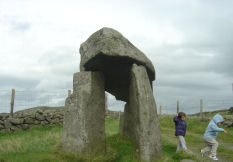 Portal tombs or dolmens are more abundant the world over and are easy to recognise.
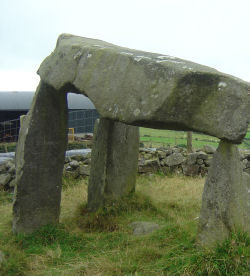
They were single-chamber tombs consisting of usually three upright stones supporting a large horizontal stone.
Where? Try to visit Legananny in County Down on the way from Banbridge to Newcastle. Located on a hill it offers beautiful vistas of the surounding hill country.
Near Newcastle you will find Slidderyford too.
Tirnoney in County Antrim, Bullylumford in Island Magee.
Wedge tombs are a typical irish type of Neolithic History. There are more than 500 examples of wedge tombs surviving.
They are called Wedge Tombs because the chamber becomes narrower at one end creating a wedge like shape.
Where can I see one? A good example of Northern Irish Wedge Tomb is Loughmacrory near Omagh in County Tyrone.
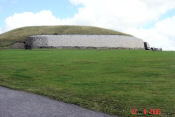 Passage Tombs seems to have developed out of Dolmens and include a passage leading to a main chamber.
Where? The best example in Ireland is Newgrange. Though located in the Republic, it is only a short drive across the border from Northern Ireland.
Now read about the History of the Celts here
Return from Northern Ireland Neolithic History to Northern Ireland History
Return from Northern Ireland Neolithic History to Northern Ireland Tourism Homepage